


Ebike Academy 03: Safety Guide -Essential Riding Rules and Legal Tips for Beginners

Whether you are commuting to work or exploring mountain trails, safety is the foundation of every great ride. In this third installment of our Ebike Academy, we dive into the vital safety protocols and legal frameworks every new rider must understand before hitting the road with their electric bike.

1. Essential Ebike Safety Gear: Beyond the Helmet
Safety starts before you even turn on the motor. While a high-quality helmet is non-negotiable, comprehensive protection involves more.

Certified Helmets: Ensure your helmet meets NTA-8776 standards, specifically designed for higher ebike speeds.
Visibility Gear: Use high-visibility vests and integrated LED lights.
Maintenance Checks: Before riding, check your tire pressure and brake responsiveness.
2. Master Your Electric Bike Speed and Braking
Electric bikes accelerate faster and weigh more than traditional bicycles. Understanding the physics of your ride is key to avoiding accidents.
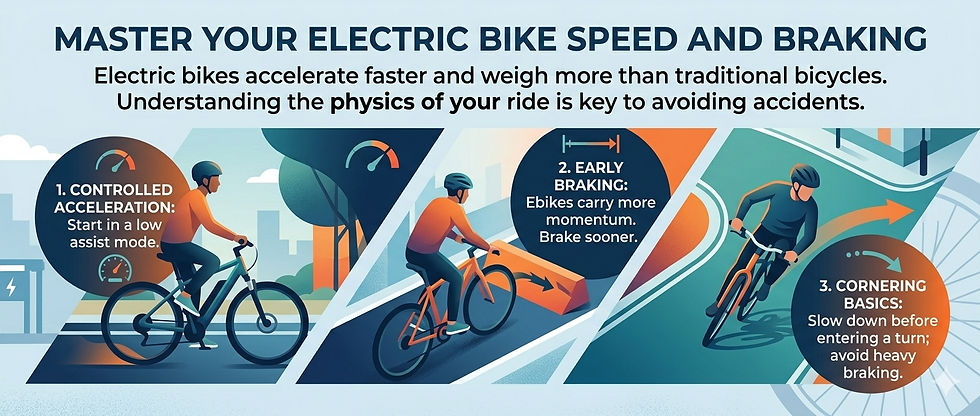
Controlled Acceleration: Start in a low assist mode to get a feel for the motor’s torque.
Early Braking: Because ebikes carry more momentum, begin braking much earlier than you would on a standard bike.
Cornering Basics: Slow down before entering a turn; avoid heavy braking while leaning.
3. Understanding Ebike Laws and Road Regulations
Ebike laws vary significantly by region (Class 1, 2, or 3). Knowing where you are legally allowed to ride ensures a stress-free experience.

Class Regulations: Know if your bike is limited to 20mph (Class 1 & 2) or 28mph (Class 3).
Path Etiquette: Always yield to pedestrians and signal your turns clearly.
Local Licensing: Some regions require registration for high-speed electric ATVs or specific mobility scooters.
4. Ride with Confidence: Tycentre Vehicles Support | Ebike Academy 03 Safety Guide and Legal Tips for Beginners
At Tycentre Vehicles, we don't just sell products; we provide a complete riding ecosystem. Our full range of ebikes, electric ATVs, and mobility scooters are engineered with premium safety features like hydraulic disc brakes and ultra-bright lighting systems.

Furthermore, our expert after-sales service ensures that your vehicle remains in peak condition. From battery health diagnostics to spare parts availability, we are committed to your long-term riding safety and satisfaction.
This is Ebike Academy 03 safety guid and legal tips for beginners.. If you are interested, please read more.


Comments