


Ebike Academy P4-09: Ebike Controller – Types, Features, DIY Selection, and Troubleshooting

If the battery is the heart of an electric bike and the motor is its muscle, then the ebike controller is undeniably the brain. This crucial component manages energy flow from the battery to the motor, processing signals from your throttle, pedal assist sensors (PAS), brake cut-offs, and handlebar display. Whether you are building a custom ebike conversion kit, upgrading your setup for extra torque, or performing routine maintenance, understanding how an electric bike controller functions is key to a smooth, safe ride. In this installment of the EBIKE ACADEMY, we explore controller types, operation logic, DIY selection rules, advanced programming, and essential troubleshooting steps.
How an Ebike Controller Works and Key Controller Types
At its core, a PAS ebike controller takes direct current (DC) power from your lithium battery and converts it into controlled three-phase alternating current (AC) pulse waves to drive a brushless DC (BLDC) motor.
Square Wave Controllers vs. Sine Wave Controllers
Square Wave Controllers: Simple, highly durable, and cost-effective. They deliver instant acceleration, though they tend to produce a slight motor humming sound during heavy throttle application.
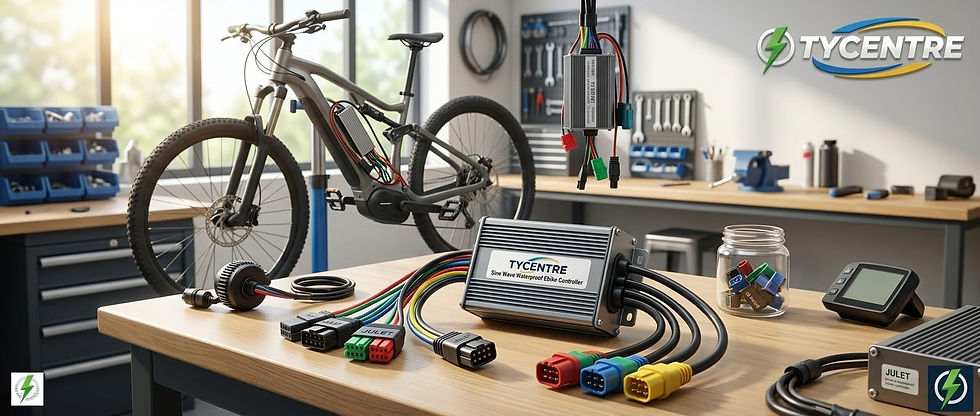
Sine Wave Controllers: Utilize Field-Oriented Control (FOC) technology to create smooth sinusoidal current waves. This results in whisper-quiet motor operation, softer acceleration curves, and higher energy efficiency.
External Controllers vs. Integrated Internal Controllers
External Controllers: Mounted on frame tubes or hidden inside controller bags/boxes. They offer superior heat dissipation, easy diagnostic access, and flexible aftermarket replacement options.
Integrated Internal Controllers: Built directly inside the motor casing (common in mid-drive motors like Bafang units) or hidden within the frame tube for clean, wire-free aesthetics.
How to Choose the Right Controller for Your DIY Ebike Conversion
When retrofitting or replacing an ebike motor controller, matching technical specifications is critical to avoid damaging electrical components.

1. Voltage and Current Rating Matching
Voltage (V): Your controller must match your battery voltage (e.g., 36V, 48V, or 52V). Dual-voltage controllers (36V/48V auto-sensing) offer great versatility.
Current Limit (Amps): Measured in Amperes (A). A typical 250W–350W setup uses a 15A–17A controller, while powerful 750W–1000W setups require 22A–30A+ controllers. Always check that your battery's continuous BMS discharge limit exceeds the controller's maximum amperage.
2. Sensor Modes & Wiring Compatibility
Dual-Mode Operation: Smart controllers can operate in both Sensored (using motor Hall sensors) and Sensorless modes. If a Hall sensor wire suffers damage on the trail, a dual-mode unit automatically switches to sensorless operation so you never get stranded.
Plug-and-Play Connectors: Look for waterproof quick-release JULET/Higo connectors to simplify wiring display units, throttles, e-brakes, and lights.
Standard vs. Advanced Controller Functions and Basic Troubleshooting
From basic safety interlocks to customizable performance profiles, modern controllers offer rich functionality.

Standard and Advanced Functions
E-Brake Cut-off Safety: Instantly cuts power to the motor the moment brake levers are pulled.
Pedal Assist System (PAS) Logic: Processes cadence or torque sensor data to adjust motor push dynamically.
Regenerative Braking (Regen): Feeds minor energy back into the battery while reducing brake pad wear on long downhill descents.
Current & Thermal Protection: Automatically throttles power if controller MOSFET temperatures exceed safety thresholds.
Quick Diagnostic & Troubleshooting Checklist
E07 / Motor Hall Sensor Error: Inspect yellow, green, and blue Hall sensor signal wires for loose pins or water ingress.
Motor Stutters / Jerks: Check phase wire connections (thick blue, green, yellow cables) for short circuits or improper color pairing.
No Response / Display Won't Turn On: Verify main battery discharge fuse, key switch wiring, and battery connector voltage with a multimeter.
Power Your Mobility Solutions with TYCENTRE VEHICLES
At TYCENTRE VEHICLES, we design and supply complete electric transport systems built for performance and durability. Our broad product catalog includes high-performance ebikes, rugged gas and electric quad ATVs, agile e-scooters, comfortable mobility scooters, and genuine ebike spare parts.
Every controller, display, and electronic component in our catalog undergoes strict quality control and thermal stress testing (IP65/IP67 rated). Backed by expert technical guidance, global warranty support, and fast worldwide logistics, TYCENTRE VEHICLES is your ultimate e-mobility partner.
Explore our complete catalog of electric bike controllers and electronic parts here:👉


Comments